7 Common Construction Delays Contractors Can Avoid by Choosing Precast
Construction delays are among the most costly risks in any project. A single day of downtime can add thousands of dollars in general conditions and labor costs, while owners lose out on rental income or face financing penalties. Repeated setbacks also damage a contractor’s reputation and weaken relationships with project partners and stakeholders.
While some delays in construction are unavoidable, many can be prevented with the right construction methods. Precast concrete products bring more factors under control—helping project managers simplify schedules, reduce risk, and deliver projects on time.
1. Site Logistics: Prevent Delays Before Work Begins
Congested staging areas, muddy access roads, and limited laydown space can slow work and cause compounding problems. When multiple contractor crews and vehicles are competing for space, efficiency drops and the risk of project delays rises.
Construction with precast concrete solutions reduces those headaches. Fewer workers are required on site, and fewer vehicles are needed to transport and install materials. Just-in-time delivery further minimizes staging challenges, keeping the project site clear and focused on progress.
2. Budget Predictability: Avoid Financing-Related Construction Delays
Budget disputes and re-estimations often stall projects, creating ripple effects that impact the entire schedule. Precast concrete products help eliminate this risk through pre-engineering.

Precast components such as insulated wall panels or hollowcore podiums are designed with penetrations, embeds, and openings planned in advance. That upfront project planning helps general contractors define more costs before the project launches, reducing the likelihood of financing delays once construction is underway.
3. Labor Shortages: Build with Fewer Workers
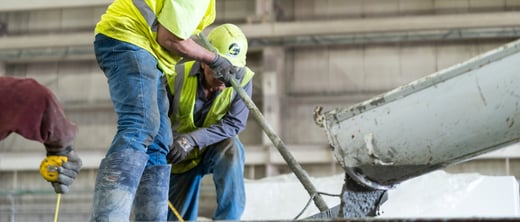
The construction industry continues to face widespread shortages of skilled labor, making it increasingly difficult to keep projects on track. Cast-in-place methods require larger crews with specialized skills to place rebar, build formwork, and pour concrete.

By comparison, precast products are manufactured off-site and arrive ready to install. Smaller crews can set precast wall panels, hollowcore planks, or precast shafts quickly and efficiently. This makes it easier for project managers to prevent schedule delays even when skilled labor is in short supply.
4. Sequencing Issues: Keep the Project on Track
Mismanaged sequencing is another common cause of construction delays in complex projects. With cast-in-place methods, tasks such as formwork, rebar placement, and curing must be completed in a precise order on site, creating multiple opportunities for setbacks.
With precast concrete solutions, those steps are completed off-site in the manufacturing facility. Installation on site is faster and more predictable, and preconstruction services help project managers coordinate site logistics and subcontractors with fewer moving parts.
5. Weather Delays: Stay on Schedule in Any Season
Weather is one of the most common causes of delay for cast-in-place construction, which often require strict temperature and moisture conditions. These delays can push schedules back days or even weeks.
Precast concrete solutions offer a more reliable solution for avoiding weather delays on a construction site.

Fabrication takes place in a controlled environment off site and often begins before the job site is ready. Manufacturers also anticipate seasonal weather patterns when planning production, so short stretches of bad weather rarely affect delivery. Once on site, precast products can be installed in a much broader range of weather conditions than cast-in-place components, allowing work to continue when other methods would be shut down.
6. Inspection Delays: Reduce Waiting Time for Approvals
Building inspections are critical to ensuring the safety and structural strength of construction projects, but scheduling inspections can be a headache for project managers. On-site inspections frequently delay progress, as crews must stop work and wait for busy officials to arrive before continuing.
Using precast construction products instead of on-site construction methods can minimize the disruption caused by inspections. Precast components are produced under rigorous quality control in the plant, eliminating the need for many on-site inspections.

For example, precast elevator and stair shafts eliminate repeated inspections that are required with traditional shafts, helping project managers avoid another common scheduling bottleneck.
7. Safety Risks: Avoid Work Stoppages from Accidents
Safety incidents are not only serious for workers, but they can also halt production and trigger investigations that can set projects back significantly.
Cast-in-place construction often requires scaffolding, which is one of the most hazardous aspects of a construction site. Cast-in-place also involves risks like formwork failure or concrete spills. Precast minimizes these hazards by reducing the need for scaffolding, requiring smaller crews, and eliminating many high-risk site activities. Fewer safety incidents mean fewer costly work stoppages.
Precast Products Accelerate Project Timelines
In addition to preventing delays, precast products can dramatically compress project schedules.
- Elevator and stair shafts: Precast systems can cut four weeks from the construction schedule of a mid-rise multifamily building. Shafts up to five stories can be installed in a single day.
- Hollowcore planks: Hundreds of thousands of square feet can be installed in a matter of days, creating an immediate work deck for following trades.
For project managers, these time savings translate into faster progress, lower costs, and earlier ROI for owners.
Mitigate Construction Delays with Precast and Prestressed Products
Delays from site logistics, budget overruns, labor shortages, sequencing and supply chain issues, unforeseen weather, inspections, and safety risks all threaten project timelines. Specifying precast concrete construction products can help bring these factors under control, allowing project managers to keep schedules on track and deliver better outcomes for owners.
Rely on County Prestress & Precast’s construction products to simplify your project timeline and minimize risks. Talk to our engineering team to learn how precast can help keep your next project on schedule. Contact us to get started.